Meet your mosquito: Culex tarsalis
Welcome to the first in an ongoing series introducing you to the mosquitoes of Washington! Most people think all mosquitoes are alike, but in reality there are about 40 different species locally. Some don’t bite humans and can safely be ignored, and others are incredibly dangerous even in small quantities. We’ll be starting with one of the dangerous ones - Culex tarsalis.
Also known as the western encephalitis mosquito, Cx. tarsalis is one of two vectors (carriers and transmitters) of West Nile virus in the state. If a bird gets infected with West Nile virus locally, a bite from Cx. tarsalis is very likely the reason why. Before we get into the nitty-gritty, take a look at an adult Cx. tarsalis under the microscope:
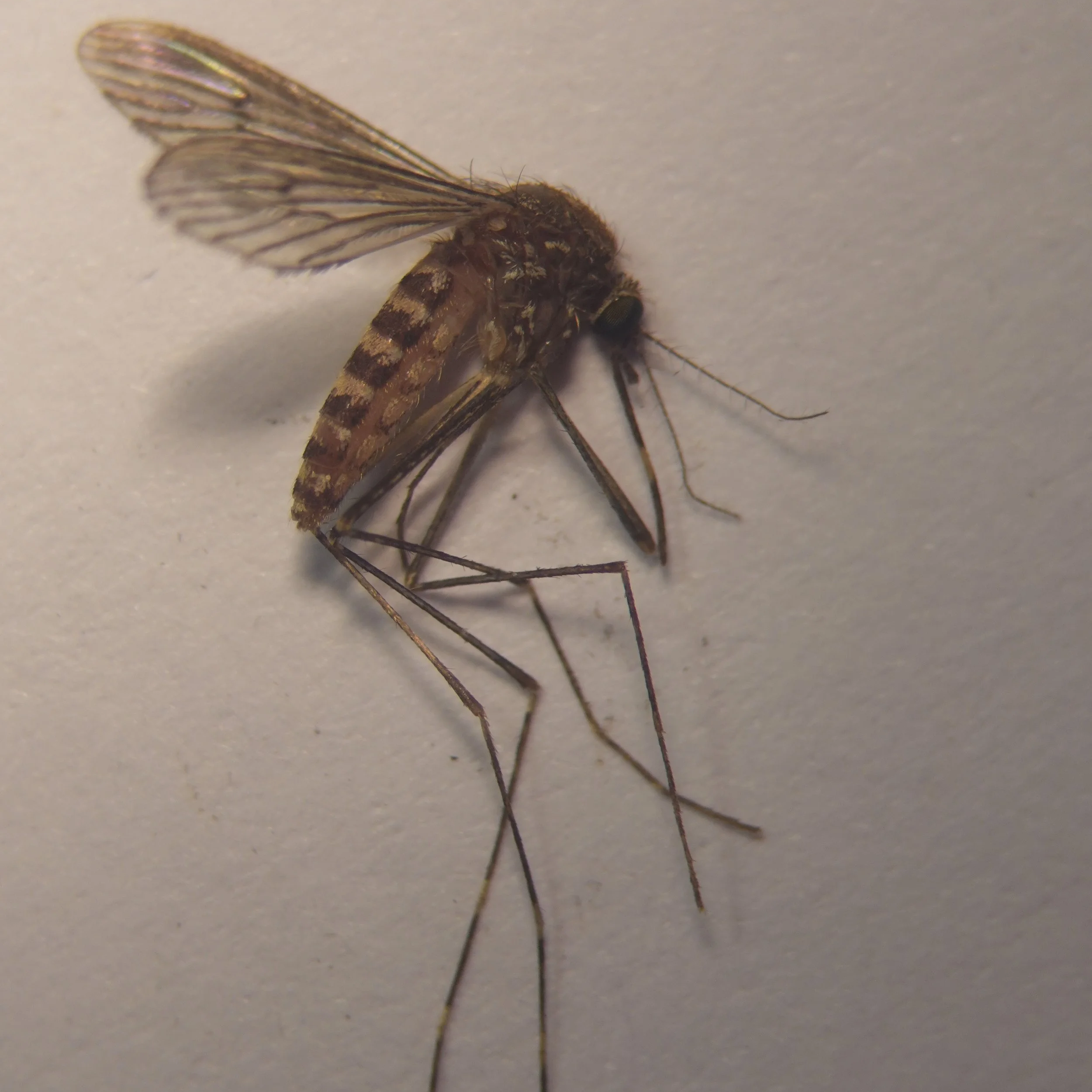
To the naked-eye, Cx. tarsalis just looks like a small brown mosquito. Under a microscope, though, it stands out from the other species in the region as the only one with both a blunt abdomen (their butt) and a striped proboscis (their needle nose).
Female Cx. tarsalis prefer to feed on birds, and they’re quite good at vectoring West Nile virus, a deadly combination. The only other local mosquito that is a proficient vector of West Nile virus is Culex pipiens - more on them in a future post. It’s easy to think of mosquitoes as flying syringes, but it actually takes the mosquito being infected and getting sick with the pathogen to spread disease, not just them drinking infected blood. Locally, only Cx. tarsalis and Cx. pipiens get sick enough with West Nile virus for them to later infect a bird with their bites. Other mosquito species in the region may drink infected blood, but don’t often get sick enough to then pass it on.
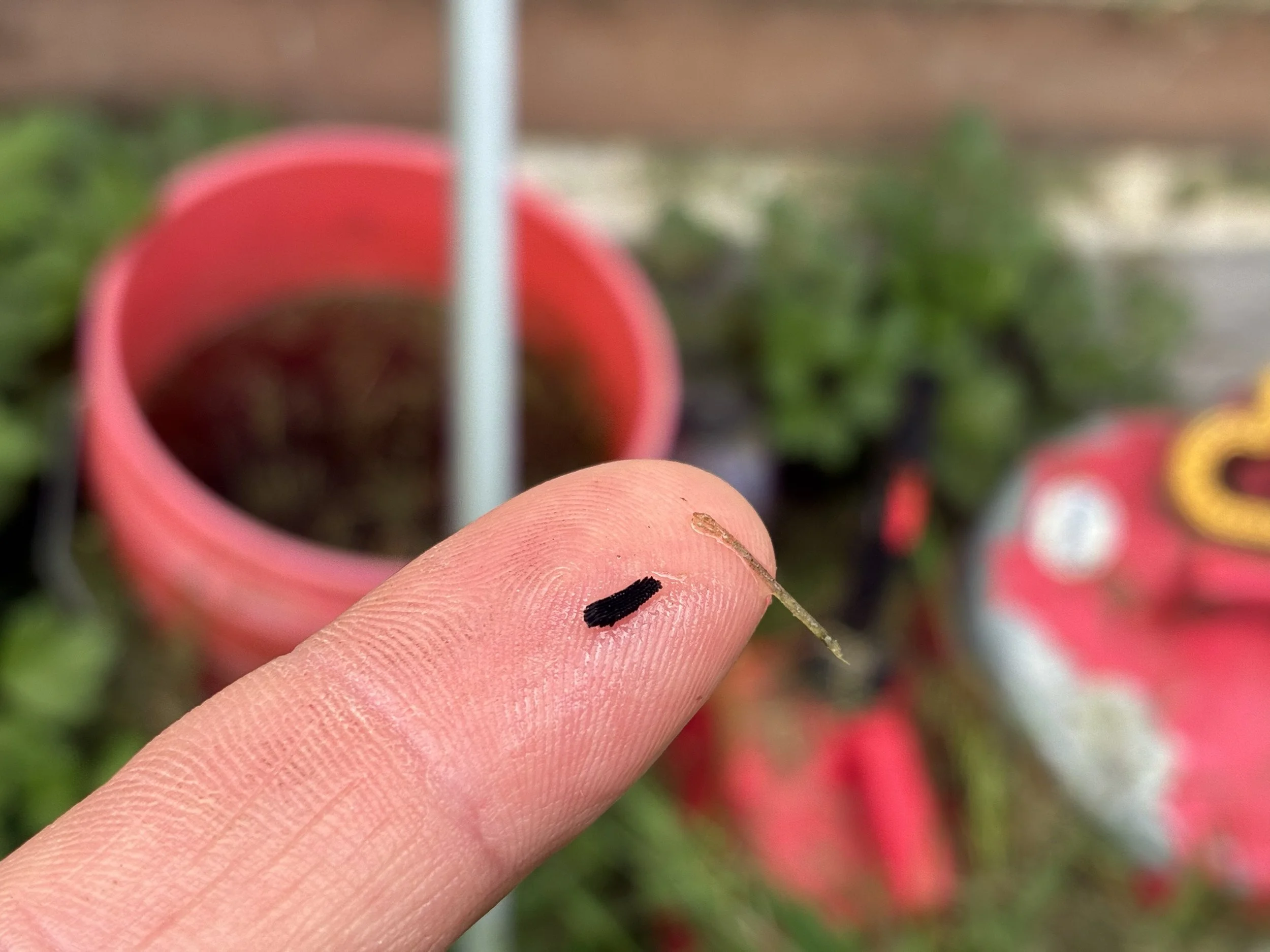
Female Cx. tarsalis only drink blood when they’re preparing to lay their egg-rafts, so named because they look a little like a raft (pictured to the side). Each raft can contain anywhere from a few dozen to a few hundred eggs, depending on the size of her blood-meal and whether or not she was interrupted while laying them.
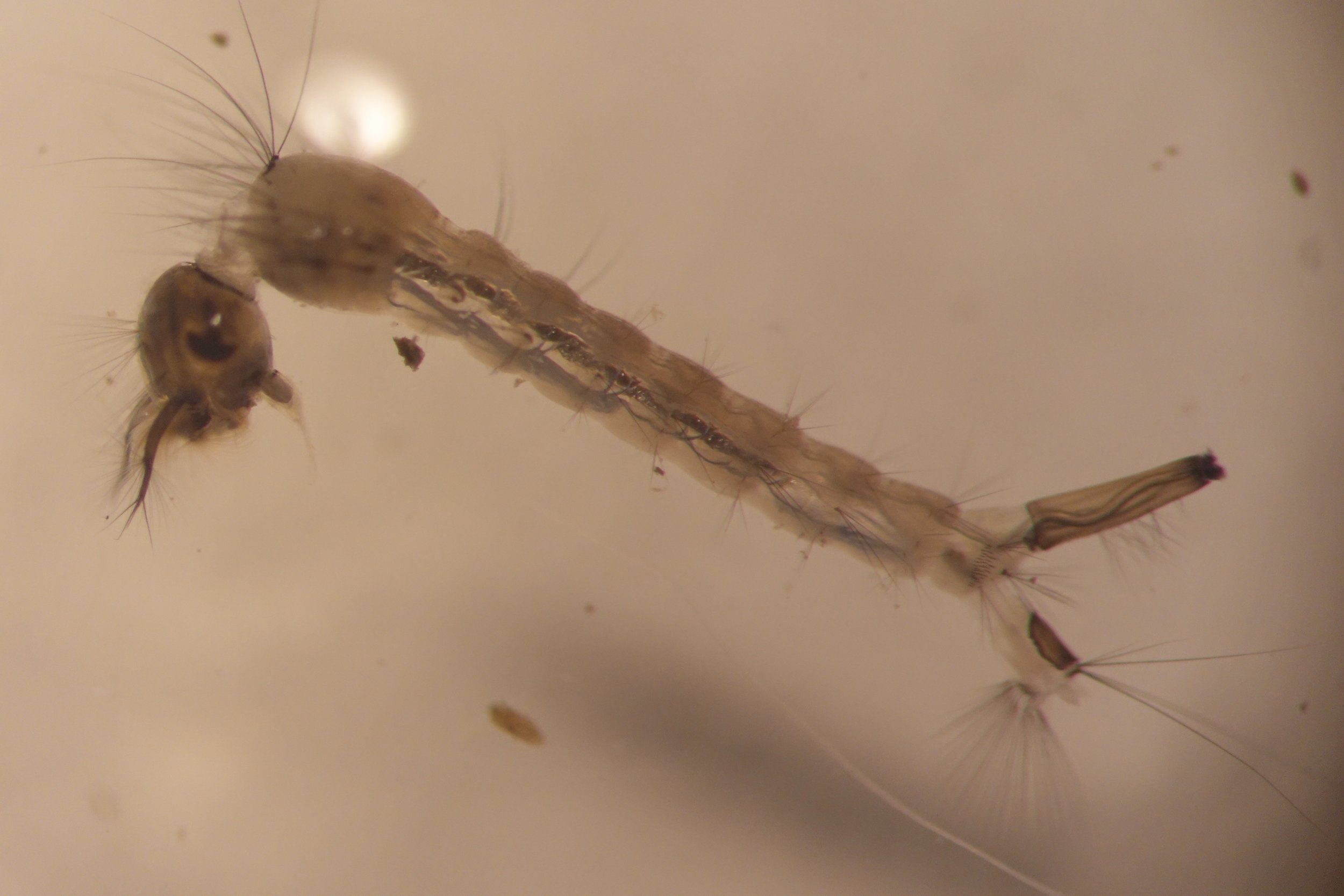
Mom usually lays her eggs in permanent water that’s a little brackish or alkaline - on Camano that means toward the coast. Those eggs hatch into larvae after a few days, pictured here. Again, this species stands out from others in the region, this time due to their very hairy siphons (the snorkel looking tube on their butt). Thanks to mom laying hundreds of eggs at a time, when I find Cx. tarsalis larvae, I usually find them in the thousands. Larvae are voracious eaters, which makes them susceptible to a bacteria that destroys their stomachs called Bti, my main tool against Cx. tarsalis.
After a week or two of eating and growing, a Cx. tarsalis larva will turn into a mobile cocoon called a pupa, and just a few days later hatch into a flying adult mosquito. I mentioned that Cx. tarsalis prefers to feed on birds, but they don’t mind drinking mammalian blood on occasion. This is what makes them so dangerous - not only do they help spread West Nile virus in birds, Cx. tarsalis can make humans (and horses) sick with it as well. As a result, it’s one of the mosquitoes I’m most interested in finding and getting rid of.
I set mosquito traps across the district weekly, and Cx. tarsalis seeking a blood-meal is one of the main mosquitoes I’m targeting. If I catch more than just one or two adult Cx. tarsalis from any site in the district, chances are I’ll be testing them for the presence of West Nile virus.
Eastern Washington is experiencing an outbreak of West Nile virus this season, and Cx. tarsalis is one of the main culprits behind it. We have yet to find any mosquitoes infected with West Nile virus on Camano, but I wouldn’t be surprised for that to change within the next few years. More on that in future stories, though!
That’s Culex tarsalis in brief. It’s a species that I’m always looking out for due to the role it plays in local transmission of West Nile virus, and one that I unfortunately find plenty of thanks to our proximity to coastal breeding grounds. One of the most important things you can do to protect yourself from West Nile virus is wear insect repellent around dusk or dawn, when Cx. tarsalis is most likely to be looking for blood.
I’ll be taking a look at our mosquito traps in greater detail in our next post. Until then, I’ll see you outside!