According to my mosquito traps and standing water inspections, the 2026 mosquito season has been over for a few weeks now. Many mosquitoes enter their version of hibernation as days get shorter and the overnight low dips below 50° F. At this point most mosquitoes won’t be actively flying or looking for blood, although a stretch of a few warm days, or a hunting trip deep into the woods might still lead to a few bites. Welcome to the mosquito off-season, and at least on Camano, it could start as early as mid-September. Every year is different, though, with warm falls extending the mosquito season, and cool springs extending the off-season.
Wait a sec - mosquito hibernation?! Sort of! It’s called diapause in the insect world, and it involves a period of low activity where insects conserve energy when it’s cold and dark out. In reality, most mosquitoes in colder climates will die come winter. Those that survive are clued into environmental cues and in the right part of their life cycle, a strategy which has evolved over millennia. Here are a few examples of how different mosquito species have evolved to survive cold weather:

For our bird-feeding, West Nile virus spreading Culex mosquitoes (Culex tarsalis pictured), adult female mosquitoes that have already mated and plumped up on food are the winter-survivors. Their strategy? Get fat and avoid the windchill. Depending on the species, adults will often overwinter in (relatively) warm culverts, storm drains, or dense foliage, all of which give them some cover from the wind and predators.

Aedes togoi, a mosquito that makes use of coastal rock pools in the nearby San Juan Islands, is one species that can overwinter as larvae. These species must be able to tolerate extremely cold environments, but have the benefit of water keeping them relatively insulated from daily temperature swings. Big shout-out to Dr. Andrea Durant’s laboratory at the University of Washington for the picture of Ae. togoi in their natural environment! They are researching how this unique species survives such salty water - check them out here. Could the lower freezing point of salt water help this species survive brief freezes in winter? I wonder!
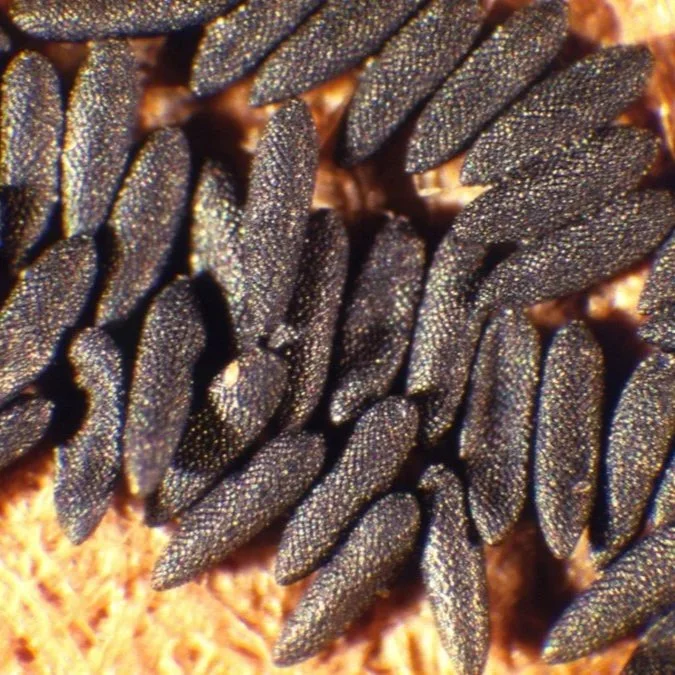
Surviving the winter is a lot simpler for some of our annoying floodwater Aedes mosquitoes. These mosquitoes lay desiccant resistant eggs in dry soil that can survive cold, heat, and in some cases many years of waiting. This strategy is one reason why nuisance mosquitoes might be particularly bad some years. If it has been years since a lot of rain coincided with warmer weather, those eggs will have been ready to go (and continuing to accumulate) for many years!
We have examples of mosquitoes surviving winter as eggs, larvae, and adults, what about the pupa/cocoon? It makes a lot of sense that a cocoon might be able to survive the winter. After all, the larva will have gotten plump beforehand, and we all know cocoons don’t mind saving energy by, well, not moving! Other flies can overwinter as pupae, which makes me think some mosquitoes must do it, but I haven’t been able to find an example in my research. If you know of any, please let me know! Conversely, if you know why mosquitoes might not be making use of their pupae for overwintering, I’d love to know that, too!
So that’s how at least a few different mosquito species survive the winter. Again, most of them are doomed come winter. Those that were in the right part of their life cycle and were paying attention to the shortening days/colder temperatures may survive. I think mosquitoes show some pretty amazing evolutionary adaptations for what’s often thought of as a “simple” animal.
Thanks for your time - stay warm!